Gate Automation & Control Systems
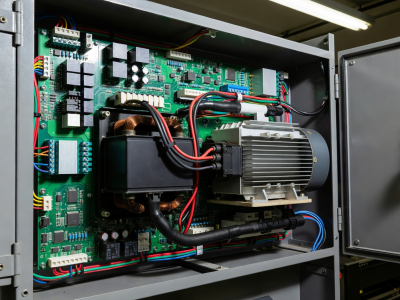
The physical steel of a security gate is only one half of the equation; the intelligence and power driving it form the core of a modern perimeter security solution. Gate automation encompasses the motors, the logic control boards, safety devices, and the myriad ways users interface with the system to gain access.
Motor Technologies
Commercial and industrial security gates are heavily engineered, requiring significant torque to move, stop, and hold them securely in place. The choice of motor technology is paramount.
- Electromechanical Motors: The standard for most applications. These utilize a geared electric motor to drive a mechanical mechanism (like a rack and pinion for sliding gates, or a worm drive for swing arms). They are cost-effective, relatively easy to maintain, and suitable for moderate to high usage.
- Hydraulic Motors: Reserved for the heaviest gates and the most demanding duty cycles. Hydraulic systems use a pump to push fluid to actuate rams. They generate immense force smoothly and quietly, and are highly resistant to wear and tear under continuous operation. While more expensive to install, they offer unparalleled longevity in harsh environments.
The Logic Controller
Housed in a weatherproof enclosure, the control panel is the brain of the gate. It manages the power delivery to the motors, dictating the acceleration, deceleration, and running speed. Crucially, it processes the inputs from all safety and access control devices.
Modern logic controllers feature sophisticated obstacle detection. By monitoring the current drawn by the motor (or via encoder feedback), the board can detect if the gate hits an obstruction and instantly reverse the movement, adding a vital layer of safety alongside physical safety edges.
Access Control Methods
How a gate is triggered to open defines the security protocol of the site. Automation systems are designed to accept dry-contact relay signals from a vast array of devices:
- ANPR (Automatic Number Plate Recognition): Cameras read vehicle plates and cross-reference a database to automatically open the gate for authorized vehicles, ensuring seamless entry without driver intervention.
- Intercom Systems: Audio or video intercoms allow visitors to communicate with a remote receptionist or security guard who can manually trigger the gate.
- Proximity Readers: Staff present RFID cards or fobs to readers mounted on gooseneck posts beside the driver's window.
- GSM Modules: Authorized users can trigger the gate by calling a specific phone number linked to a SIM card in the control panel.
Mandatory Safety Devices
Automated gates are classified as machinery and are subject to strict safety regulations to prevent crushing, shearing, and impact injuries.
Resistive Safety Edges: These are sensitive rubber profiles fitted to all potential trapping points on the gate and surrounding posts. If compressed, they send a signal to the controller to halt and reverse immediately.
Photocells: Infrared beams that span the driveway opening. If the beam is broken by a vehicle or pedestrian, the gate will refuse to close. Advanced systems use laser scanners to create a safety curtain over a wider area.
Loop Detectors: Inductive wire loops cut into the road surface detect the metal mass of a vehicle. They are often used as a safety device to prevent the gate closing on a car, or as a free-exit trigger to allow vehicles to leave the site automatically.